
Sanitation Crew vs. Production Crew: Why Food Plants Need Dedicated Sanitation Staff

November 13, 2026

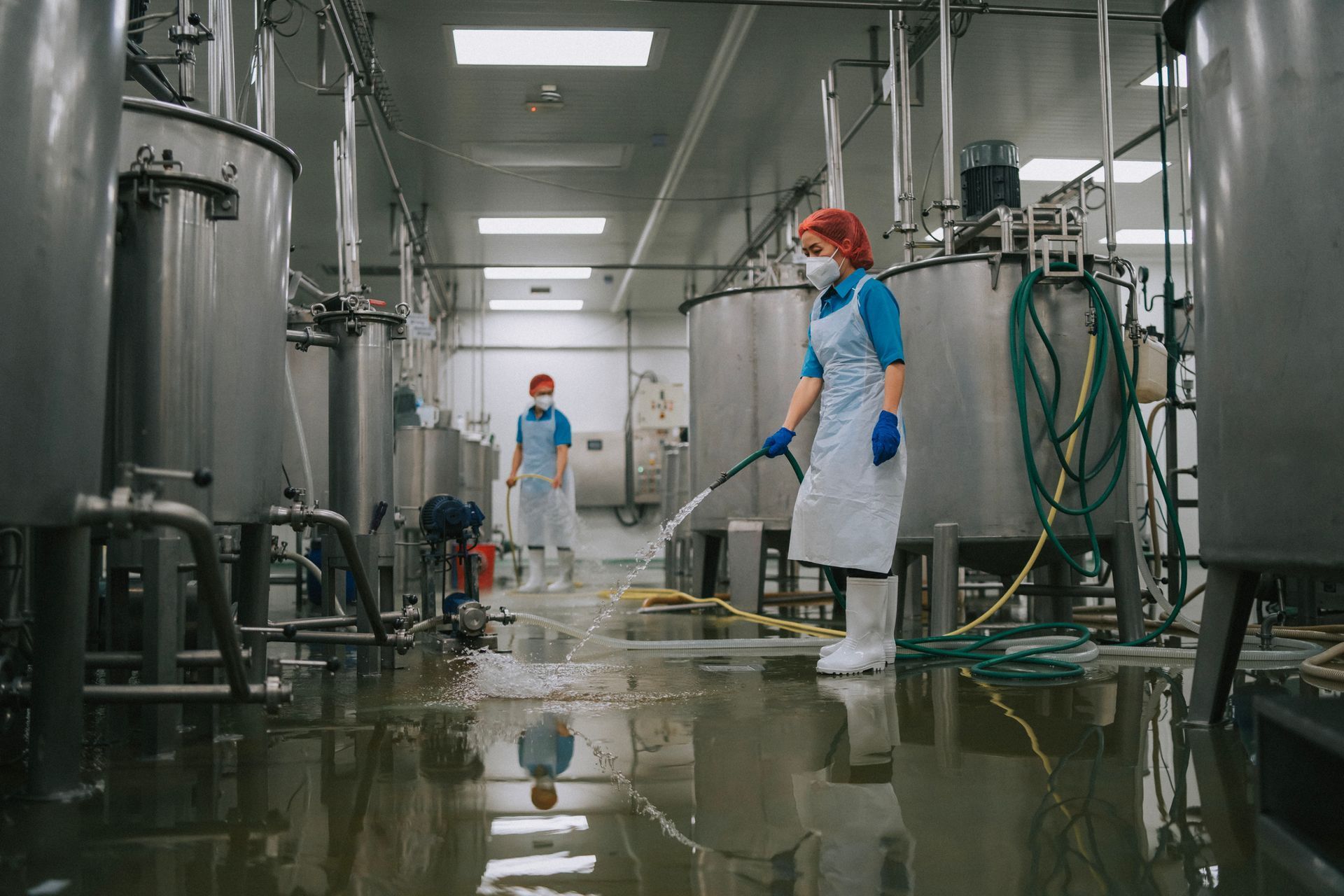
In many food plants, sanitation is whoever is left when the last case comes off the line. Operators finish a ten-hour production shift, pick up hoses and brushes, and clean the equipment they just ran. It looks efficient on a labor report. It also concentrates risk in the part of the day when people are most tired and most eager to leave. A dedicated sanitation crew separates the two jobs, and for most food plants the case for doing so comes down to safety, food safety, and accountability.

What is the difference between a sanitation crew and a production crew?

A production crew runs the process: operating equipment, feeding lines, and packing product to hit output targets. A dedicated sanitation crew cleans and sanitizes the plant between production runs, following written sanitation procedures, chemical safety rules, and lockout/tagout requirements, and its performance is measured by cleanliness and verification results.

The skills overlap less than people assume. A good operator knows how a machine runs. A good sanitation worker knows how it comes apart, where soil collects, which chemical removes which soil, how long it needs to stay in contact, and how to make the equipment safe to reach into. Those are different jobs, and they're measured differently.

Why does pulling line workers onto sanitation create risk?

Pulling line workers onto sanitation creates risk in four areas: worker injury from machinery and chemicals, incomplete cleaning under time pressure, allergen and pathogen carryover between runs, and blurred accountability. Each traces back to the same issue. Production staff are trained and evaluated to run product, and sanitation becomes an add-on at the end of a long shift.

Machine safety and lockout/tagout

Cleaning inside equipment is one of the riskiest tasks in a food plant. OSHA's lockout/tagout standard, 29 CFR 1910.147, includes cleaning and unjamming in its definition of servicing and maintenance. It also distinguishes between affected employees, who need instruction on the purpose of the energy control procedure, and authorized employees, who need full training to recognize and control hazardous energy before they work on equipment.

A line operator is often trained as an affected employee. Moving that operator into sanitation without authorized-employee training creates a gap the standard doesn't allow. A dedicated crew can be trained, retrained, and audited on energy control as a core part of the job.

Chemical handling

Sanitation chemicals include concentrated alkaline and acid cleaners and sanitizers that can burn skin and eyes or react if mixed. OSHA's Hazard Communication standard, 29 CFR 1910.1200, requires employers to train workers on the hazardous chemicals in their work area. A rotating group of production workers who clean occasionally is harder to keep current on chemical hazards, dilution, and PPE than a crew that does it every night.

Time pressure and fatigue

When production runs long, the sanitation window shrinks, and when the same people do both jobs, they absorb the overrun. The predictable result is shortcuts: shorter chemical contact times, skipped teardown steps, and less attention to the hard-to-reach places where soil builds up. Those are the steps a verification swab or inspection will catch later.

Allergen and pathogen carryover

FDA's sanitary operations rule, 21 CFR 117.35, requires food-contact surfaces to be cleaned as frequently as necessary to protect against allergen cross-contact and contamination. Allergen changeovers in particular depend on thorough, consistent cleaning. That is hard to guarantee when the task depends on who happens to be available at the end of a shift.

Accountability

When the people who want the line running are the same people deciding whether it's clean enough to restart, there's a built-in conflict. Separating the roles gives the plant a clear handoff: production releases the room, sanitation cleans it, and QA or a supervisor verifies it before production takes it back.

Production crew vs. dedicated sanitation crew: a side-by-side comparison

Factor Production crew doing sanitation Dedicated sanitation crew
Primary training Running equipment and hitting output Cleaning, sanitizing, chemical safety, energy control
Lockout/tagout status Often affected employees only Trained as authorized employees for cleaning tasks
Timing End of a full production shift Scheduled shift starting fresh
Effect of production overruns Sanitation time gets cut Handoff time is planned and protected
Consistency Varies by who is available Same procedures, same people, every night
Accountability Shared, often unclear Clear handoff from production to sanitation to verification
Labor cost visibility Hidden in production overtime Tracked as its own line item

Options for staffing a dedicated sanitation crew

Food plants generally choose among three models. Each can work. The right one depends on plant size, number of shifts, and how much the sanitation workload changes through the year.

  • In-house sanitation department. The plant hires, trains, and supervises its own sanitation staff. This gives the most direct control and usually makes sense for large, multi-shift operations with steady volume.
  • Outsourced sanitation. An outside provider supplies, trains, and supervises the crew under a written scope. This works well for plants that want sanitation managed as a service, or that have struggled to keep an in-house crew staffed.
  • Hybrid with supplementary support. A small in-house team handles equipment sanitation, and outside support staff take on floors, walls, high-touch zones, welfare areas, or seasonal surges. This is often the fastest way to stop pulling line workers off production.

System4 supports the outsourced and hybrid models through two services. Food production sanitation covers equipment and machinery degreasing, production floor and wall cleaning, food-grade antimicrobial surface treatment, high-touch zone sanitation, and hard floor maintenance. Food production labor and staffing includes sanitation and maintenance support staff who can supplement an in-house team.

What to look for in a sanitation crew, in-house or outsourced

Whichever model you choose, hold the crew to the same standards:

  1. Written sanitation procedures for each piece of equipment and each area, with the crew trained on them.
  2. Authorized-employee lockout/tagout training for anyone who cleans inside equipment, with periodic review.
  3. Hazard communication training covering every chemical the crew uses.
  4. A named supervisor on every sanitation shift.
  5. A verification step, such as visual inspection or swabbing, before production takes the room back.
  6. Records the plant can produce during an audit or inspection.

For outside providers, add questions about screening, insurance, crew consistency, and who manages the account. System4 crews are vetted, insured, and background checked, and a dedicated local account manager oversees crews and runs quality inspections.

Who owns what when sanitation is outsourced?

When sanitation is outsourced, the plant still owns its food safety program. That includes its written sanitation procedures, food safety plan, energy control program, hazard communication program, and the decision to release a room back to production. The provider owns performing the agreed scope, training and supervising its crew, following the plant's procedures, and documenting completed work.

Plants in the Springfield and Worcester corridor work with System4 through its Western and Central Massachusetts commercial cleaning team, alongside Rhode Island and Connecticut.

Frequently Asked Questions

  • Why shouldn't production workers do sanitation in a food plant?

    Production workers can do sanitation, but it adds risk. They're usually cleaning at the end of a long shift, are often trained only as affected employees under lockout/tagout, may not be current on chemical hazards, and absorb cuts to the cleaning window when production runs long. Those conditions lead to injuries and incomplete cleaning.


    A dedicated crew is trained and measured on sanitation, which makes results more consistent.

  • What does a food plant sanitation crew do?

    A food plant sanitation crew cleans and sanitizes the facility between production runs. Typical work includes equipment teardown and degreasing, cleaning and sanitizing food-contact surfaces, floor, wall, and drain cleaning, chemical mixing and handling, energy control on equipment being cleaned, and documenting completed work for verification before production restarts.


    Most sanitation crews work a scheduled shift after production ends, often overnight.

  • Do sanitation workers need lockout/tagout training?

    Yes, if they clean inside machinery. OSHA's 29 CFR 1910.147 counts cleaning and unjamming as servicing and maintenance when workers could be exposed to unexpected startup or stored energy. Workers performing that cleaning must be trained as authorized employees, which is a higher level of training than the instruction given to affected employees.


    The plant's written energy control procedures apply to in-house and outside crews alike.

  • Is it better to outsource food plant sanitation or keep it in-house?

    It depends on plant size, shift structure, and how stable the workload is. In-house crews give direct control and suit large, steady, multi-shift plants. Outsourcing suits plants that want sanitation managed as a service or struggle to keep a crew staffed. A hybrid model uses a small in-house team plus outside support for floors, walls, and surges.


    In every model, the plant keeps ownership of its food safety program and restart decisions.

  • How do I know if my sanitation program is working?

    A sanitation program is working when cleaning is completed to written procedures every shift, verification checks such as visual inspections or swabs pass consistently before production restarts, and records are complete. Warning signs include recurring verification failures, cleaning time being cut when production runs long, and different results depending on who cleaned.


    Track verification results over time to spot trends early.

Separating the jobs

A dedicated sanitation crew gives a food plant trained people, a protected cleaning window, and a clear handoff between production and verification. If your line workers are still cleaning at the end of their shifts, start by moving the highest-risk task, cleaning inside powered equipment, to trained sanitation staff, and build from there. This article is general information, not legal or regulatory advice, so confirm requirements against your own written programs or with a qualified compliance advisor.

If you'd like help sizing a sanitation crew for your plant, System4 schedules on-site facility walkthroughs across RI, CT, and Western and Central MA, or you can reach the team at (401) 615-7043.

Share this article

Recent Posts

Worker vacuuming a hallway beside a white railing, wearing a red backpack vacuum in a facility lobby
October 25, 2026
Learn essential bank branch janitorial cleaning standards, security access protocols, and detail care routines. Schedule a facility walkthrough today.
Autumn city skyline reflected in a calm river beside a riverside walkway and railing
October 18, 2026
Prepare New England commercial buildings for cold weather with this 15-point fall facility maintenance checklist. Schedule a walkthrough today.
Janitorial cart with mop, cleaning supplies, yellow bags, and trash can in a hallway
October 11, 2026
Compare day porter vs night cleaning services for commercial offices. Evaluate costs, security, and facility needs. Schedule a walkthrough today.
Hotel lobby with glass entrance doors, seating area, and “System4 Facility Services Management” sign
October 4, 2026
Determine the ideal janitorial schedule for your commercial facility by space and industry. Schedule an on-site facility walkthrough today.
Bright art classroom with students working at tables and colorful wall shelves of supplies
September 22, 2026
Consolidate your vendors across RI, CT, and MA. Learn how multi-location commercial cleaning management simplifies your portfolio operations. Call us today.
Janitor vacuuming a hallway with a canister vacuum and floor attachment
September 15, 2026
Compare the total financial and operational impact of in-house vs outsourced janitorial services. Use our cost comparison worksheet to evaluate your facility.
Yellow
September 8, 2026
Stop chasing recurring janitorial issues. Identify the root causes of service failures and build a closed-loop resolution model for your property today.
Office hallway with two elevators and cleaning equipment cart beside them
September 3, 2026
Track vendor performance and eliminate cleaning defects with a janitorial quality control scorecard. Download actionable KPIs to audit your facility today.
Gloved hand wiping a metal door handle with blue cloth; text reads, “Your Facility Has Germ Hotspots. Do You Know Where?”
March 16, 2026
Discover 6 hidden germ hotspots in your facility and how often they should be cleaned to reduce absenteeism, complaints, and tenant churn.
Office split-screen: man reviewing papers beside “Commercial Cleaning Comparison” ad and a handshake with checklist.
January 5, 2026
Split-screen visual: Franchise chaos vs. System4IPS managed clarity. A single dedicated contact for New England commercial cleaning.

Show More